
Spend is up, AI activity is up, and boards are asking a critical question: where are the returns? As B2B software companies build their 2027 plans, leaders need to move beyond AI adoption metrics and understand how AI translates into measurable business outcomes. The opportunity is not simply to do more with AI, but to build the intelligence, operating models, and financial assumptions that turn AI investments into real returns on go-to-market (GTM) spend.
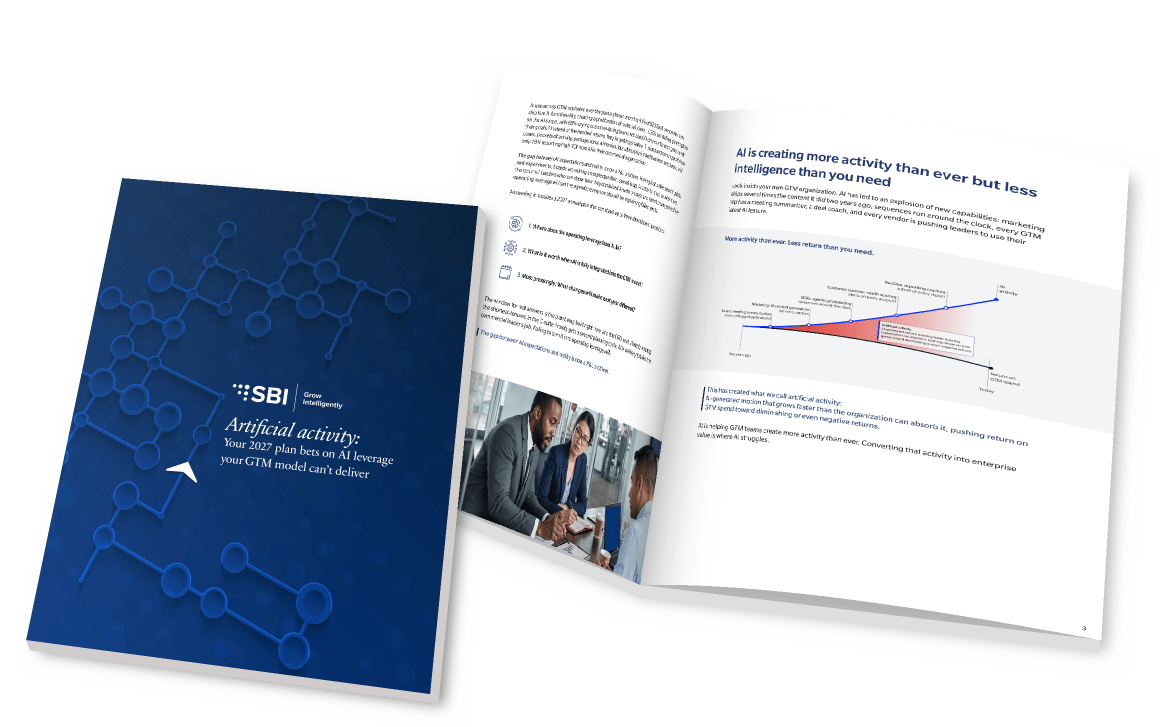
Why More AI Activity Doesn’t Always Mean Better Returns
Understand why AI can increase GTM activity without improving the intelligence behind business decisions, and how this gap affects the return on GTM investment.
The Three Traps Holding AI Back
Explore the three common traps that prevent organizations from reaching the intelligence threshold needed to unlock AI’s full business value.
The Four AI Chains That Drive Leverage
Discover the four AI chains with the greatest potential to create leverage across the business, including the value each can deliver when implemented effectively.
How to Price AI by Function
Learn how to evaluate AI’s economic impact across key functions, from sales development representatives (SDRs) and enablement to Revenue Operations (RevOps) and customer success, to build a clearer picture of capacity, costs, and potential returns.
Turning 2027 Assumptions into Action
See how a growth office can translate AI assumptions in the annual plan into measurable, ongoing operational changes that connect investment decisions to business performance.
The gap between AI adoption and measurable returns represents a significant opportunity. The next step is to make AI economics a core part of the 2027 plan, with clear assumptions, accountable ownership, and a direct connection between AI investment and business outcomes.