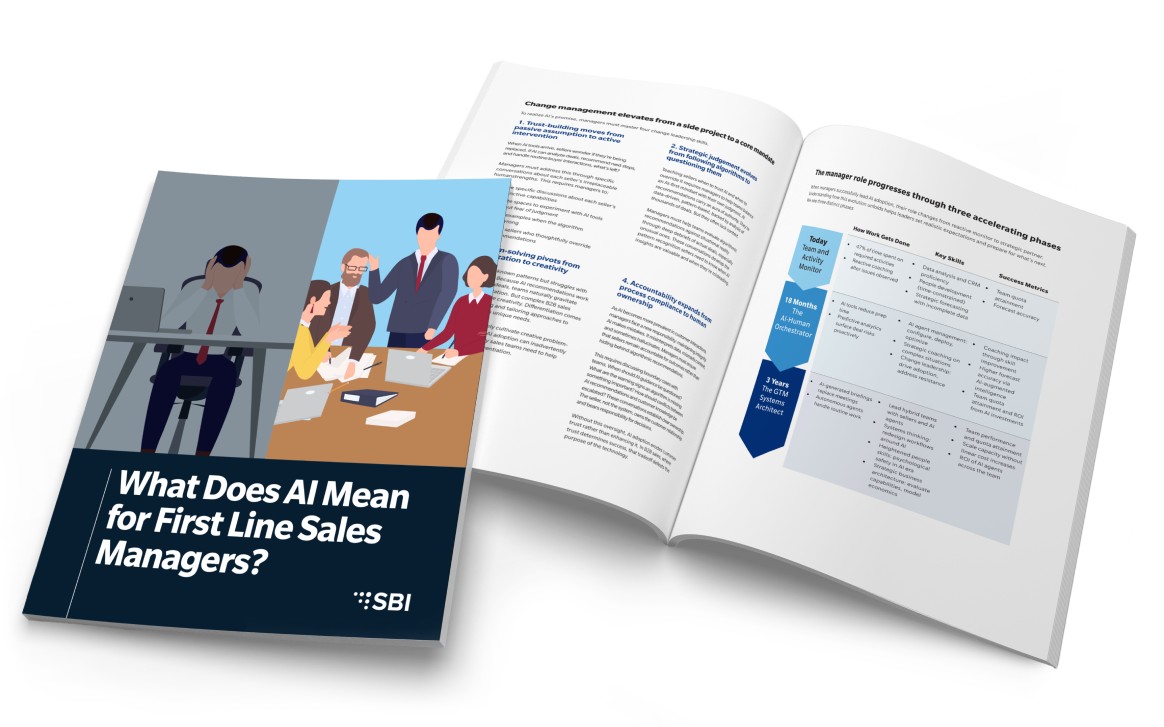
It means the end of the "admin-heavy" era. Stop drowning in data and start architecting revenue.
Revenue growth has collapsed.
Growth plummeted from 22% in 2021 to a projected 5% in 2025. While leaders look for external excuses, the root cause is internal: a broken frontline operating model where managers spend 47% of their time on low-value administration and only 15% on coaching.
Most organizations will fail at AI adoption because they layer technology over a broken process. To restore growth, you must use AI to fundamentally shift the manager’s mandate from "inspecting the past" to "influencing the future."
Flip the ratio: Admin to coaching AI offers a specific operational lever: it can reduce administrative burden by 26% and double coaching time to 32%. But this only happens if you strip away the "Team Monitor" model and force a new standard of behavior.
The 4 pillars of AI change leadership Technology is the easy part. The challenge is managerial. To prevent another failed technology investment, managers must master four non-negotiable skills:
Build Trust, Kill Fear Sellers are anxious about replacement. Managers must proactively address this by proving that AI handles the patterns, while humans handle the people
Enforce Strategic Judgment Algorithms lack context. Managers must teach teams when to override the data. If a rep cannot explain why they are overruling the AI, they aren't managing the deal
Demand Creative Problem-Solving AI standardizes; humans adapt. Leaders must run "challenge sessions" to handle complex, edge-case deals that the algorithm cannot solve
Restore Human Accountability
AI is a tool, not an excuse. Ensure sellers own the outcome. Blaming the algorithm for a lost deal is a fireable offense.