Sales Kickoff ROI: How to Build an SKO That Pays Off All Year

Most sales leaders can tell you what they spent on their last sales kickoff. Few can tell you what it returned.
A quality in-person sales kickoff now runs roughly $3,000 to $5,000 per attendee. For a 500-person sales organization, that's $1.5 million to $2.5 million before anyone closes a deal, and before you factor in the opportunity cost of lost selling time. Few organizations can tie that spend to a measurable change in performance, and a CFO would push back on that return from any other line item.
Roughly a third of the revenue leaders SBI talks with say their boards now want ROI data for enablement and AI spend. "Everyone had a great time" and "the survey scores were great" no longer count as answers.
Many organizations treat the kickoff as the finish line of annual planning, when it should mark the start of performance improvement.
-
Key Insights • A sales kickoff for a 500-person sales organization can cost $1.5 million to $2.5 million
before counting a week of lost selling time.
• According to SBI research, companies that got off to a fast start in Q1 had a 75%
chance of outperforming their peers for the full year.
• Learning retention research cited by SBI shows that 84% of training content is lost
within 90 days when nothing reinforces it.
• Reframing the sales kickoff as Revenue Acceleration Summit focuses success on
improved sales metrics rather than satisfaction scores.
• Frontline sales managers decide whether kickoff skills survive past the first Monday
back, so they need preparation before the event and accountability after it.
Why the SKO return often doesn't materialize
The stakes extend well past the event. According to SBI research, companies that got off to a
fast start in Q1 had a 75% chance of outperforming their peers for the full year. A kickoff held in late January or February can help set the priorities and skills that determine whether early momentum holds.
But many unsuccessful kickoffs often fall into one of three traps.
The concierge trap. Enablement takes orders from every function that wants agenda time. The result is an overloaded schedule stitched together from competing priorities, with no single behavior change at the center.
The playlist trap. Each session works on its own, but the agenda plays like a shuffled playlist instead of a sequenced album. Without a deliberate arc connecting the sessions, attendees leave with a stack of ideas and no sense of which ones matter most.
The fireworks trap. The event builds to a big finish, with a headline act and a big dinner, and the momentum is gone by the first Monday back. The energy was real, but nothing after the event was built to carry it forward.
All three traps leave participants unsure what to do differently or how to apply the concepts once they're back in front of customers. An agenda that asks them to absorb too much content dilutes the few behaviors that would move results. The forgetting curve finishes the job: learning retention research cited by SBI shows that about half of training content is gone within five weeks without reinforcement.
Reframe the kickoff as a Revenue Acceleration Summit
The alternative is to run the event as a Revenue Acceleration Summit: an investment you judge by pipeline growth and the Closed-Won report. Success is defined in business terms before the agenda is built, practice sits at the center of the event, managers carry the skills forward, and results are tracked at 30, 60, and 90 days. The model rests on five design principles.
1. Define success in business terms first
Before you build the sales kickoff agenda or book a speaker, decide which outcomes you'll measure in the months after the event. Choose two or three tied to the year's priorities, such as pipeline growth in a target segment, win rates against a new entrant, or deal size on renewals. Set the baseline now. These measures then decide what earns a place on the agenda.
2. Appoint a curator, not a concierge
The concierge trap begins when nobody owns the agenda. In sales kickoff planning, someone close to the CRO, often a chief of staff, should own it, build it around one red thread tied to the outcomes above, and have the authority to say no. A session that doesn't serve the red thread can move to a pre-event video.
3. Make practice the center of the agenda
Put at least 40% of the time into hands-on work on real deals. Practice has always been the best proxy for experience, but personalization at scale has held it back at kickoffs. A facilitator can walk a room of 300 people and coach only a few tables, leaving everyone else with little feedback.
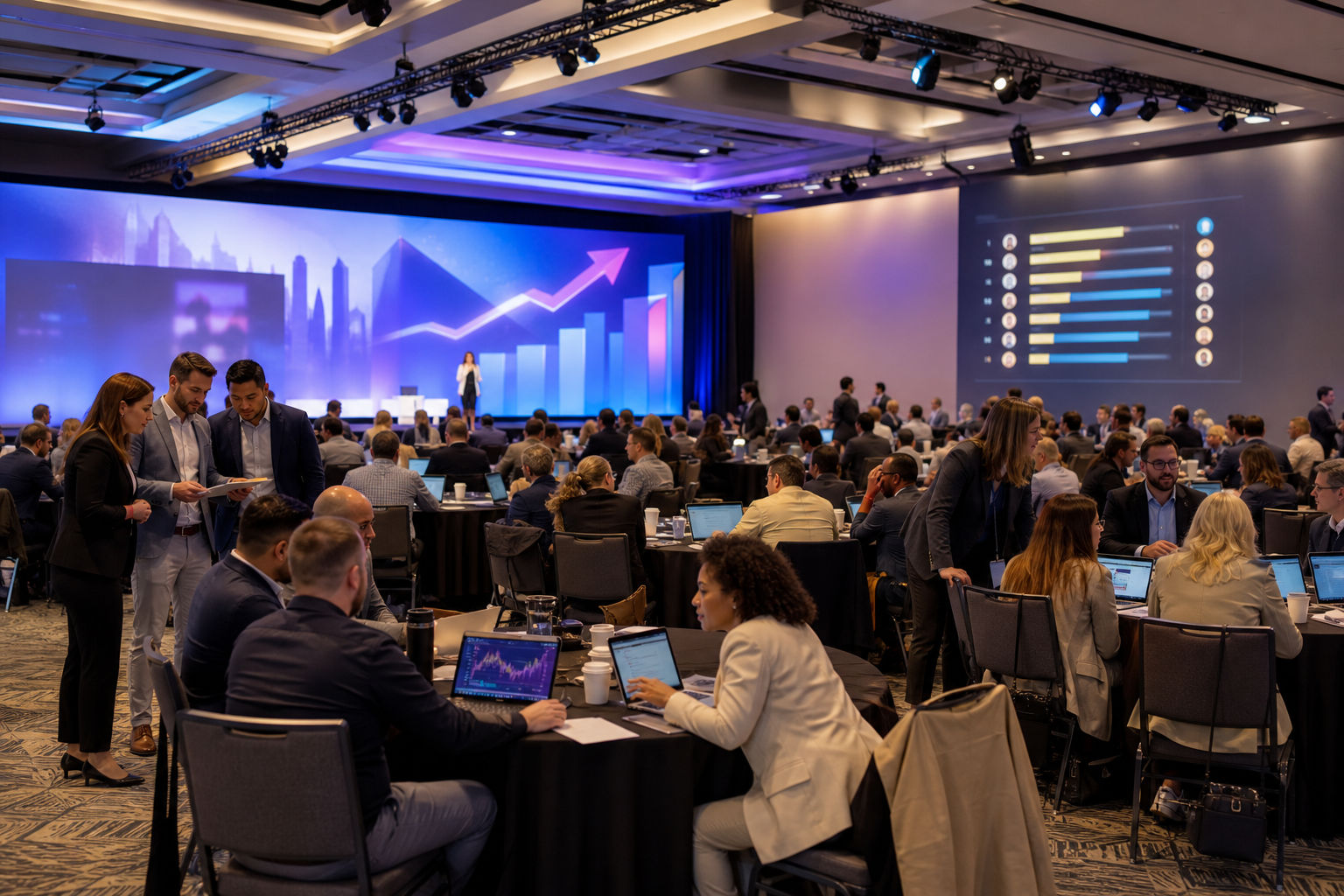
AI removes that constraint. In the immersive sessions SBI runs, rooms of 200 to 500 people work in mixed-role table groups, each capturing the team's input on a laptop. Every table gets a scenario built from the company's real priorities: booking new meetings, expanding an account, renewing at a higher price, or competing against a new entrant. The scenarios carry the complexity and distractions of real deals, so teams must think on their feet instead of reciting a script.
A leaderboard keeps the competition going, and facilitators can see which tables are struggling and step in. The scoring pays off after the event. It shows where the gaps are, whether in strategy, skills, or product knowledge, and for which regions and roles, so reinforcement and coaching can go where they're needed.
4. Prepare managers to carry the message forward
Nobody masters a new skill at a single event, and after the Summit, frontline sales managers are best positioned to reinforce it. Bring them in first, through a dedicated Manager Day or a virtual session ahead of the onsite, and prepare them for their coaching role during and after the event, beyond a preview of the content. Afterward, managers should use the new skills and language in one-on-ones, deal reviews, and Deal Clinics built around live opportunities, which is where strategic sales coaching does its work.
Ownership of manager readiness matters. In an SBI/RES survey of 134 enablement leaders and frontline sales managers, about 95% of top-performing organizations reported that enablement has direct responsibility for manager training, compared with about 41% of lower performers.
Hold managers accountable. Reinforcement activity is measurable and belongs on the same scorecard as business outcomes. Senior leaders own a piece of this too: the leaders who get the most from a kickoff repeat the same core message week after week and cascade it through their management teams.
5. Measure at 30, 60 and 90 days, then all year
Satisfaction surveys and confidence ratings provide useful insight, but they're leading indicators at best. You see sales kickoff ROI when business metrics move on the priorities you set before the event: pipeline growth, win rates, deal size, sales cycle length, and deal margin.
Keep the structure simple. Set a baseline before the summit, then check the same measures at 30, 60, and 90 days. Early checkpoints should track leading indicators like skill adoption and completion rates, and later checkpoints should show movement in pipeline and conversion. For longer sales cycles, stage conversion and multithreading are the best 90-day signals. This cadence is what turns the event into sales training reinforcement rather than a one-time experience.
After the first 90 days, fold the same measures into quarterly business reviews for the rest of the year. Win rates, deal size, and attainment take longer to move, and the full-year view shows whether the fast start held. It also gives you evidence to shape next year's SKO around the gaps that persisted, instead of starting from a blank agenda.
The most expensive kickoff is the one that produces a great week and an ordinary year, whatever the venue or headliner cost. Judge the event by what's different in your pipeline and bookings in the second quarter and beyond, not by what people said on the flight home.
Want your next sales kickoff to pay off well beyond the event?
SBI's Sales Coaching™ program equips frontline sales managers with a proven coaching
process, customized coaching plans, and the tools to reinforce new skills on live deals.
Schedule a consultation to learn how SBI can help your managers turn kickoff content into lasting behavior change.